

When you sit with someone who has lived more than a hundred years, time slows to its honest pace. Stories arrive unhurried, layered, and often without the drama we add in hindsight. You hear the contours of a century from a voice that weathered it, softened by age, sharpened by memory. I feel that gift every time I sit with Ms. Hortense McClinton, the first African American faculty member at UNC–Chapel Hill. In her presence, history didn’t feel like a textbook timeline; it felt like a house you could walk through-room by room, lesson by lesson.
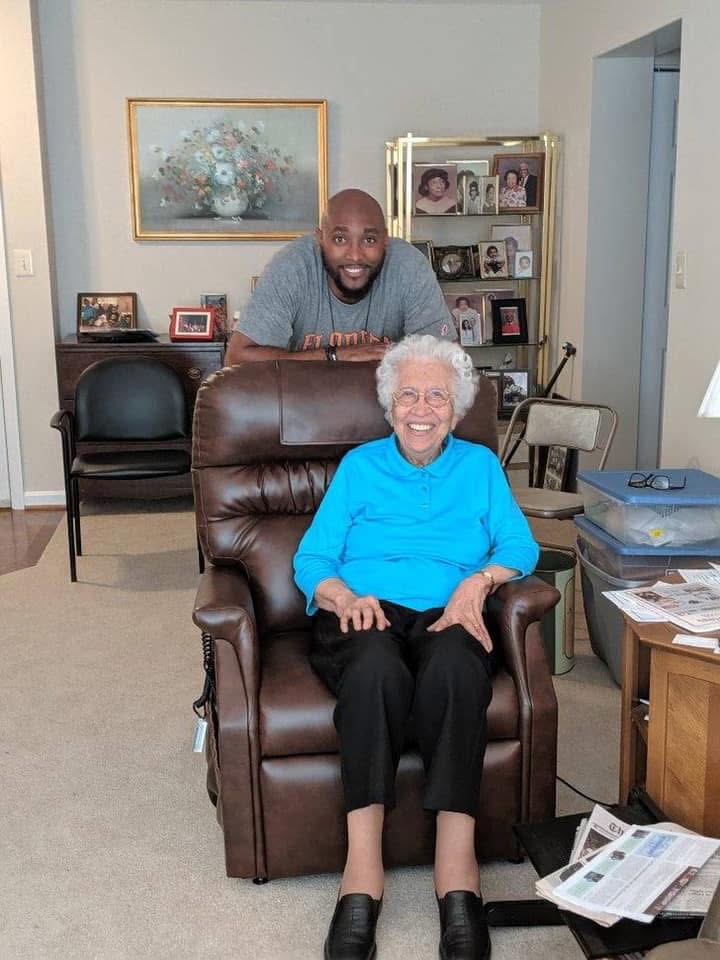
Time with Ms. McClinton is an education in dignity. This treasure doesn’t rush to be profound. She tells the truth plainly, and somehow that plainness is where the power lives. She broke the color line at UNC, doing it in the field of social work, that is equal parts scholarship and service. What stays with me isn’t only the milestone she represents, but the way she talks about former students, community, and accountability. She reminds you that integrative care of body, mind, spirit, and neighbor is not a trend; it’s a through-line that helped her endure and flourish.
A Century Seen Up Close
Centenarians carry first-person footnotes to events we’ve turned into headlines. In conversation, those headlines breathe the following events she has recollection of in history.
- Tulsa Race Massacre (1921): Not an abstract “event” but a warning about how quickly prosperity can be targeted when paired with Black autonomy, and how memory must be protected when official accounts try to bury it.
- Global wars and the home front: World War II ration books, letters, “Rosie” and returning soldiers, the GI Bill’s unequal promise, how policy opens doors for some and locks them for others.
- The long Civil Rights era: From bus boycotts to lunch-counter sit-ins to fair housing fights in neighborhoods that still wear the battle scars.
- Presidential scandals: Watergate, Iran, Bill Clinton, and beyond—proof that institutions wobble, and that public trust is a fragile with leadership.
- Presidential firsts: John F. Kennedy as the first Catholic president; Barack Obama as the first Black president; Kamala Harris as the first woman, first Black and South Asian American vice president, each “first” both celebration and reminder of the distance still to travel.
- Technological whiplash: From party-line phones to smartphones, from handwritten ledgers to data clouds.
- The present moment: Pandemic grief, political polarization, environmental instability, and the relentless pace of life—set against stubborn threads of community care that refuse to fray.
Longevity as Testimony
Reaching 100-plus is biology, yes, but the centenarians I meet, including Ms. McClinton show how holistic living stacks the odds against early mortality and stagnation.
If you’re blessed with a centenarian in your family or community, treat your time with them like a sacred appointment. Bring gentle curiosity and practical respect. We’re quick to call museums “treasures,” and they are. But so are the elders living down the street. If we want a wiser country, we have to talk to and share the lives of our elders while they can still talk back, correct us, and laugh with us.
Don’t wait for a perfect setup. Start with an afternoon. Start with a thank-you. Start with Ms. McClinton’s lesson: make your life useful to others, and longevity becomes more than a number it becomes a beacon.